
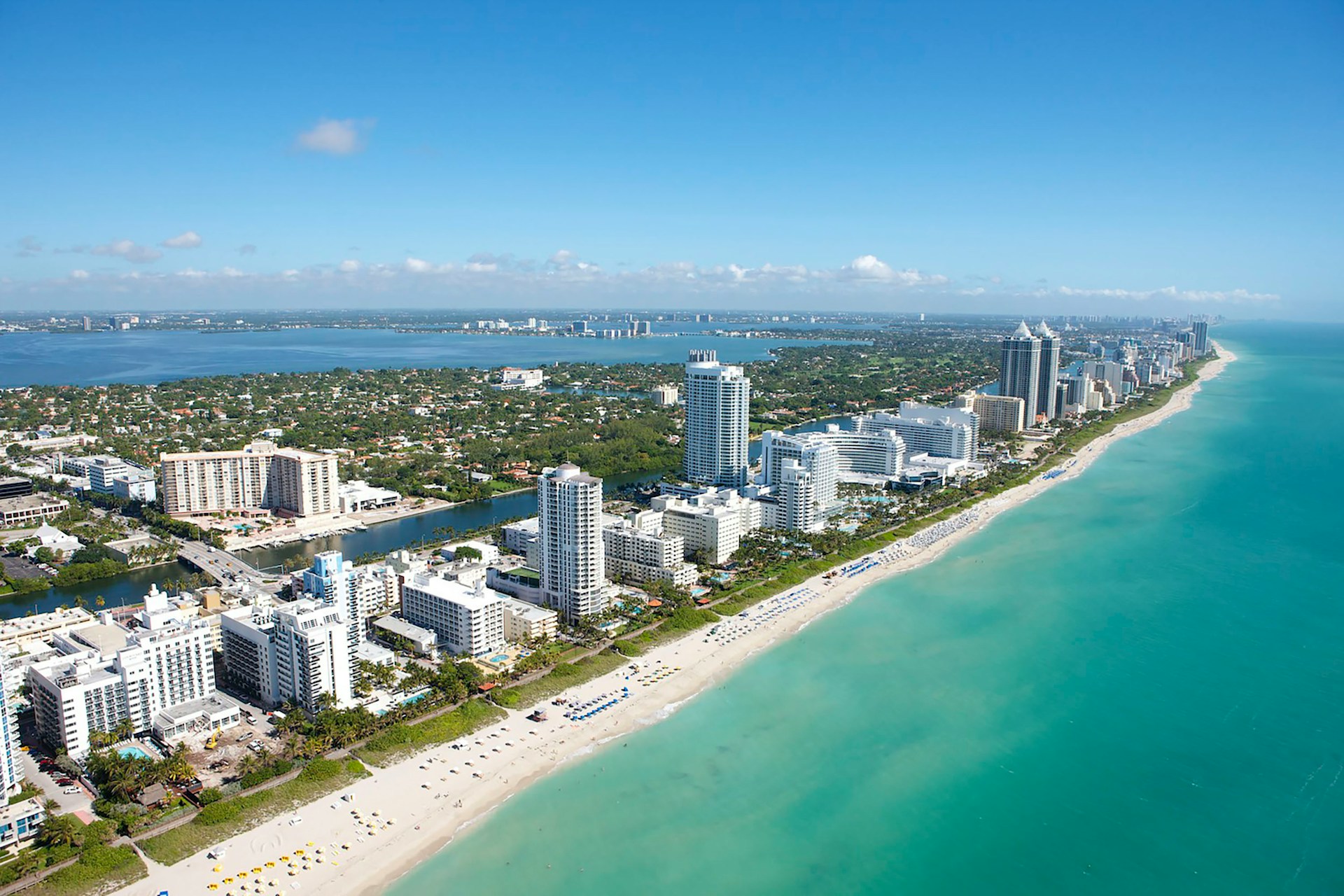
Florida is one of the strongest franchise markets in the country, and the case for frozen treat concepts here is more straightforward than almost anywhere else. Miami, Tampa, Orlando, and Jacksonville each see well over 200 days a year with highs above 80°F, compared to a fraction of that in northern cities like Cleveland or Minneapolis, according to NOAA climate normals data. The state’s year-round warm climate eliminates the seasonal compression that limits operating windows in northern markets. Its population has grown by more than 400,000 residents annually in recent years, with the largest gains concentrated in the Tampa Bay area, Miami-Dade and Broward counties, Orlando, and Jacksonville. No state income tax, a large retiree and tourism economy, and a consistent base of family-oriented suburban communities give franchise operators a compelling combination of demand drivers.
For entrepreneurs researching ice cream and frozen treat franchise opportunities in Florida, the fundamentals are hard to argue with. Tourists generate year-round foot traffic in coastal and theme park markets. Suburban residential growth in the I-4 corridor and around Tampa Bay is creating new retail trade areas that franchise operators are actively targeting. A climate that keeps residents outdoors for twelve months means the frozen dessert category does not experience the weather-driven demand drop that affects other parts of the country.
This guide covers what to look for in a Florida frozen treat franchise, how to evaluate the options, and why Rita’s Italian Ice and Frozen Custard is actively expanding into Florida markets.
Key Takeaways
- Florida’s year-round warm climate gives frozen treat franchise owners an operating advantage that most markets cannot match. Drive-thru locations in particular support twelve-month operations, and they averaged 38% higher gross sales than standard shops in 2025.1
- Florida is one of the fastest-growing states in the country, adding more than 400,000 residents per year, with major franchise growth concentrated in Tampa Bay, Orlando, Miami, and Jacksonville.
- Dairy-heavy concepts absorb the full force of ingredient inflation. Ice cream prices have climbed more than 35% since 2019. Rita’s sidesteps most of that pressure. Combined food, paper, and fuel surcharge costs averaged 17.3% of gross sales system-wide in 2025 (food alone: 14.8%), well below the 28-35% typical of traditional restaurant franchises.2
- Rita’s is actively expanding into Florida with over 600 locations, 40-plus years of operating history, and a support infrastructure that gives new owners a head start in markets where the brand is still building presence.3
- Startup investment ranges from $295,233 to $915,536 depending on format and site, with a minimum of $150,000 in liquid capital and $400,000 net worth required.4
Why Florida Is a Strong Market for Frozen Treat Franchises
A warm climate, high foot traffic among families, and healthy tourism-centered economy all drive frozen dessert sales in the Sunshine State, making frozen treat franchises a great opportunity:
- Florida’s population now exceeds 23 million, making it the third most populous state in the country, and it continues to grow at a rate that outpaces most of the nation.
- The Orlando metro drew more than 70 million visitors in 2024, creating a tourist-driven demand base that most franchise markets simply do not have.
- Tampa Bay’s population exceeds three million and has been one of the fastest-growing metros in the Southeast, with significant residential development in communities like Wesley Chapel, Riverview, and Brandon.
- Miami-Dade and Broward counties combine for more than four million residents, with a dense, diverse consumer base and strong year-round retail activity.
Florida’s climate also removes the seasonal calculus that shapes franchise economics in most other states. Rita’s walk-up shops in northern markets typically operate from March through October. In Florida, operators can run year-round from day one, which changes the revenue model meaningfully.
That extended season is especially valuable combined with a drive-thru format. According to Item 19 of the 2026 FDD, drive-thru shops averaged $508,897 in gross sales compared to $366,957 for non-drive-thru locations in 2025, a 38% gap.1
What should potential owners look for in a Florida ice cream franchise?
Not all frozen treat concepts are built the same way, a distinction that matters in an environment where ice cream prices have climbed more than 35% since 2019. Before committing to any concept or business model, prospective franchise owners in Florida should evaluate a few key variables.
Product model and ingredient economics
Dairy-heavy concepts face ongoing margin pressure from volatile ingredient costs. Concepts that rely primarily on non-dairy or low-cost ingredients, such as Italian ice made from water, sugar, and real fruit, carry structurally lower food costs. The system-wide average for combined food, paper, and fuel surcharge costs was 17.3% of gross sales in 2025. That’s well below the 28% to 35% range typical of traditional restaurant and QSR franchises. Food costs alone averaged 14.8%.2
Low operational complexity
Florida’s tourism-heavy markets and competitive coastal labor environment reward concepts that train staff quickly and run lean. Most Rita’s locations run one to five team members per shift, and employees can typically be trained in one or two shifts. No cooking, no commercial kitchen equipment, and simple prep requirements all contribute to a manageable day-to-day operation.
Format flexibility
Florida markets vary significantly, from high-volume tourist corridors near Walt Disney World and Universal to dense suburban retail strips in Wesley Chapel or Pembroke Pines. A concept that offers multiple footprints, from walk-up shops to drive-thru configurations, gives operators more ways to match the format to the site and the customer base.
Brand longevity and system support
A newer concept may offer lower entry costs, but an established system with over 600 locations, 40-plus years of operating history, and a developed training and support infrastructure reduces the uncertainty that comes with building a customer base from scratch.3
Key Florida Cities for Frozen Treat Franchise Investment
Tampa Bay
The Tampa Bay market, spanning Tampa, St. Petersburg, Clearwater, and a rapidly expanding ring of suburban communities, has been one of the most active franchise development markets in the Southeast. Wesley Chapel to the north, Brandon to the east, and Riverview to the south have all seen significant residential development, creating new retail trade areas with family-oriented demographics that align well with frozen treat concepts. Tampa Bay’s tourism economy, anchored by Busch Gardens, the Gulf Coast beaches, and a growing sports and event calendar, adds a visitor demand layer on top of the residential base.
Orlando
Orlando’s status as the most-visited tourist destination in the United States creates a franchise demand environment unlike anywhere else in the country. Beyond the theme park corridors, Orlando’s residential suburbs (Lake Nona, Windermere, Oviedo, and communities along the I-4 corridor) have grown substantially and support year-round neighborhood retail. The combination of tourist traffic and a dense local population makes Orlando one of the most attractive markets in Florida for a high-visibility frozen treat concept.
Miami and South Florida
Miami-Dade and Broward counties represent the largest combined consumer market in Florida. The region’s warm climate, outdoor lifestyle culture, and large family population across communities like Doral, Coral Springs, Pembroke Pines, and Hialeah create consistent demand for accessible frozen dessert concepts. South Florida’s tourist economy, anchored by Miami Beach, the Port of Miami, and year-round events, drives foot traffic well beyond what a purely residential market would generate.
Jacksonville
Jacksonville is Florida’s largest city by land area and has one of the fastest-growing populations in the state. Its suburban communities, including Fleming Island, Ponte Vedra, St. Johns, and Mandarin, are home to large concentrations of families with above-average household incomes who represent a strong core customer base for neighborhood frozen treat concepts. Jacksonville’s relatively lower commercial real estate costs compared to Miami and Tampa also create favorable conditions for franchise buildout economics.

Rita’s Italian Ice in Florida: What the Opportunity Looks Like
Rita’s Italian Ice and Frozen Custard is the largest Italian Ice concept in the world, with over 600 locations across more than 30 states.3 Florida represents a significant growth opportunity for the brand, which has been actively expanding its footprint into new markets.
Rita’s menu is built on two products: Italian Ice and Frozen Custard. Every item is some variation of those two things. That focused menu produces a simple, manageable operation with no cooking, minimal equipment complexity, and a staff training model that works well in competitive labor markets.
Average gross sales for top-tier Rita’s shops reached $558,103 in the 2025 season. Middle-tier shops averaged $345,566 and bottom-tier shops averaged $220,095.5 These are reported gross sales figures from franchisee point-of-sale data and do not reflect operating expenses, rent, royalties, or other costs. Individual results vary, and prospective franchisees should review the full FDD before drawing any conclusions about their own potential performance.
For Florida operators, where year-round operations are viable and drive-thru infrastructure is widely available across suburban retail corridors, the drive-thru format consideration carries particular weight. The 33 drive-thru shops in the 2025 data sample averaged $508,897 in gross sales, compared to $366,957 for non-drive-thru locations.1
The total estimated initial investment for a standard Rita’s shop without a drive-thru ranges from $295,233 to $712,542. A standard shop with a drive-thru runs from $436,858 to $915,536. Those ranges reflect real variables including local lease markets, site conditions, and buildout requirements. The initial franchise fee ranges from $15,000 to $35,000, included within those totals. Financial qualifications require a minimum of $150,000 in liquid capital and a net worth of at least $400,000.4
Training, Support, and Getting Started
New Rita’s franchisees complete training through Cool University, Rita’s dedicated training program covering operations, product preparation, customer service, and local marketing. Hands-on training at an operating location is built into the curriculum alongside classroom components. Ongoing coaching and business development support continues long after opening.
Rita’s also requires a minimum new shop marketing expenditure of $12,000 in the pre-opening period, included in the initial investment estimates.4 That investment supports local launch activities designed to drive early awareness in the market.
The franchise development team can walk you through the discovery process and what pursuing this Italian ice and custard franchise opportunity in a specific Florida market would involve.
Florida Frozen Treat Franchise Frequently Asked Questions
Is Rita’s Italian Ice available as a franchise in Florida?
Rita’s is actively expanding into Florida and has open territories across The Sunshine State.
How much does it cost to open a frozen treat franchise in Florida?
A standard shop without a drive-thru carries a total estimated initial investment of $295,233 to $712,542. A drive-thru configuration runs from $436,858 to $915,536.4 Local lease rates, site conditions, and buildout requirements all affect where a specific project lands within those ranges.
What financial qualifications does Rita’s require?
Rita’s requires a minimum of $150,000 in liquid capital and a net worth of at least $400,000.4 Many franchisees finance a portion of their startup costs through third-party lenders to preserve working capital for operations.
Do frozen treat franchises perform well in Florida year-round?
Florida’s climate makes year-round operation viable from the start, a meaningful advantage over markets where seasonal calendars compress the revenue window. Drive-thru locations support twelve-month operations, and FDD data shows drive-thru shops outperforming standard locations by 39% in gross sales.1
What sets Rita’s apart from other ice cream franchises in Florida?
Rita’s builds its core product, Italian ice, from water, sugar, and real fruit rather than dairy. That ingredient profile keeps food costs low and sidesteps the dairy and cocoa price volatility that has pushed ice cream prices up more than 35% since 2019. The two-product menu also eliminates cooking, reduces equipment complexity, and makes staff training fast, a real advantage in Florida’s tourist-heavy, high-turnover labor markets.
How do I get started with a Rita’s franchise in Florida?
Reach out to Rita’s franchise development team through the contact form at ownaritasfranchise.com. The process moves from an intro call and questionnaire through FDD review and a discovery day before any agreements are signed.
This information is not intended as an offer to sell, or the solicitation of an offer to buy, a franchise. Financial performance figures referenced above are sourced from Item 19 of the Rita’s Franchise Company, LLC Franchise Disclosure Document, dated January 30, 2026. Investment figures are sourced from Item 7 of the same document. Some outlets have sold this amount. Your individual results may differ. There is no assurance that you will sell as much. Prospective franchisees should review the FDD carefully and consult with independent legal and financial advisors before making any investment decision.
1: Rita’s Franchise Company, LLC, 2026 Franchise Disclosure Document, Item 19, Table 3.
2: Rita’s Franchise Company, LLC, 2026 Franchise Disclosure Document, Item 19, Table 4.
3: Rita’s Franchise Company, LLC, 2026 Franchise Disclosure Document, Item 20.
4: Rita’s Franchise Company, LLC, 2026 Franchise Disclosure Document, Item 7.
5: Rita’s Franchise Company, LLC, 2026 Franchise Disclosure Document, Item 19, Table 1.
6: Rita’s Franchise Company, LLC, 2026 Franchise Disclosure Document, Item 11.